
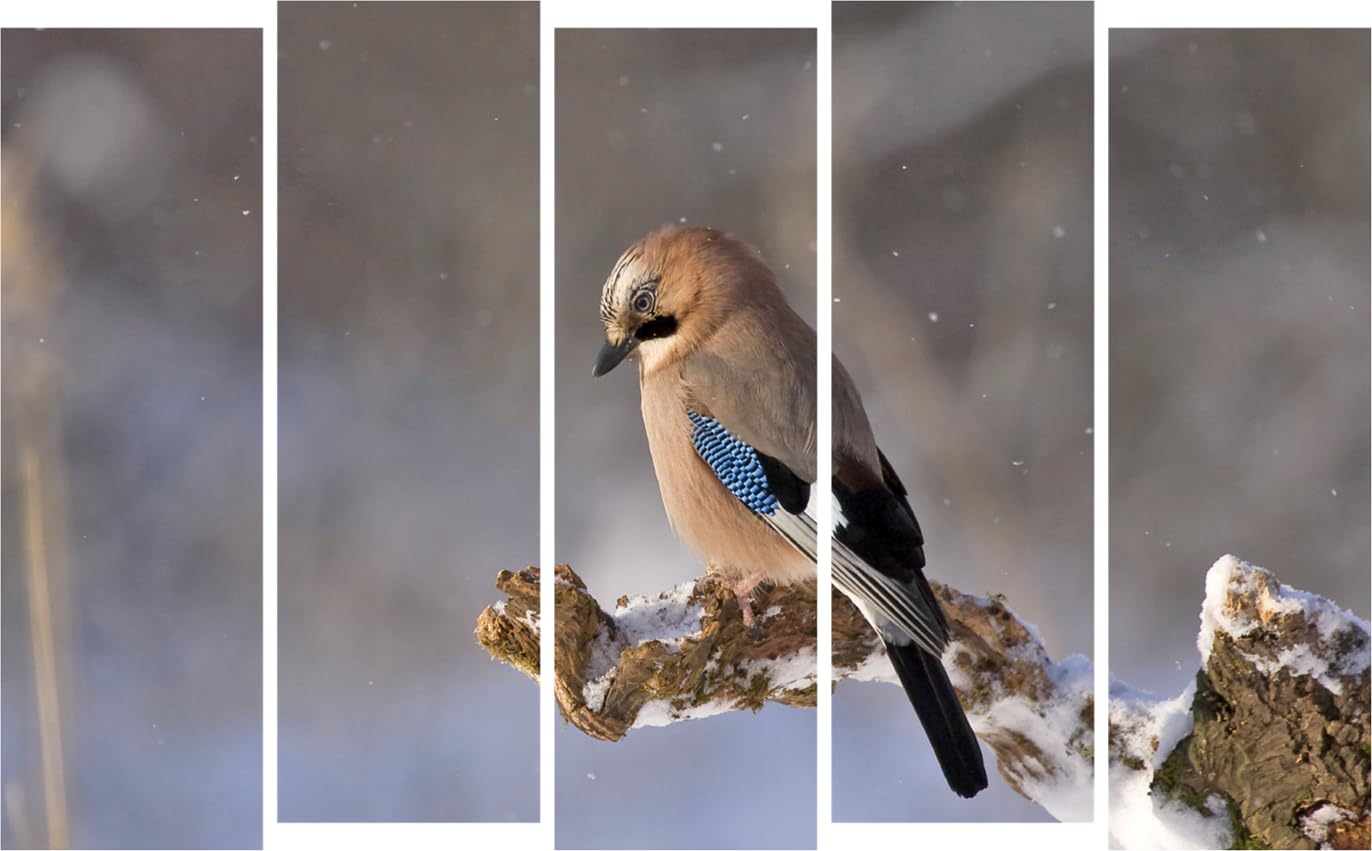
Bird-iful Multi-Framed Wall Art Thatll Have Your Walls Chirping with Joy (150x76cm)
You may also like

Moolwan 5-Panel Winter Bird Canvas Wall Art Painting (127x76cm) - Eurasian Jay Nature Multi-Frame Art
You might have browsed dozens of bird canvas wall art pieces by now. Some were too small—that 60cm set that looked like a postage stamp above your sofa. Some were overwhelming—those 200cm panoramas that made your 12-foot wall feel cramped. You probably kept coming back to something around 120-130cm—because intuitively, it feels right for a standard Indian living room wall. But you want to be sure before spending ₹2,796 on something you'll see every single day.
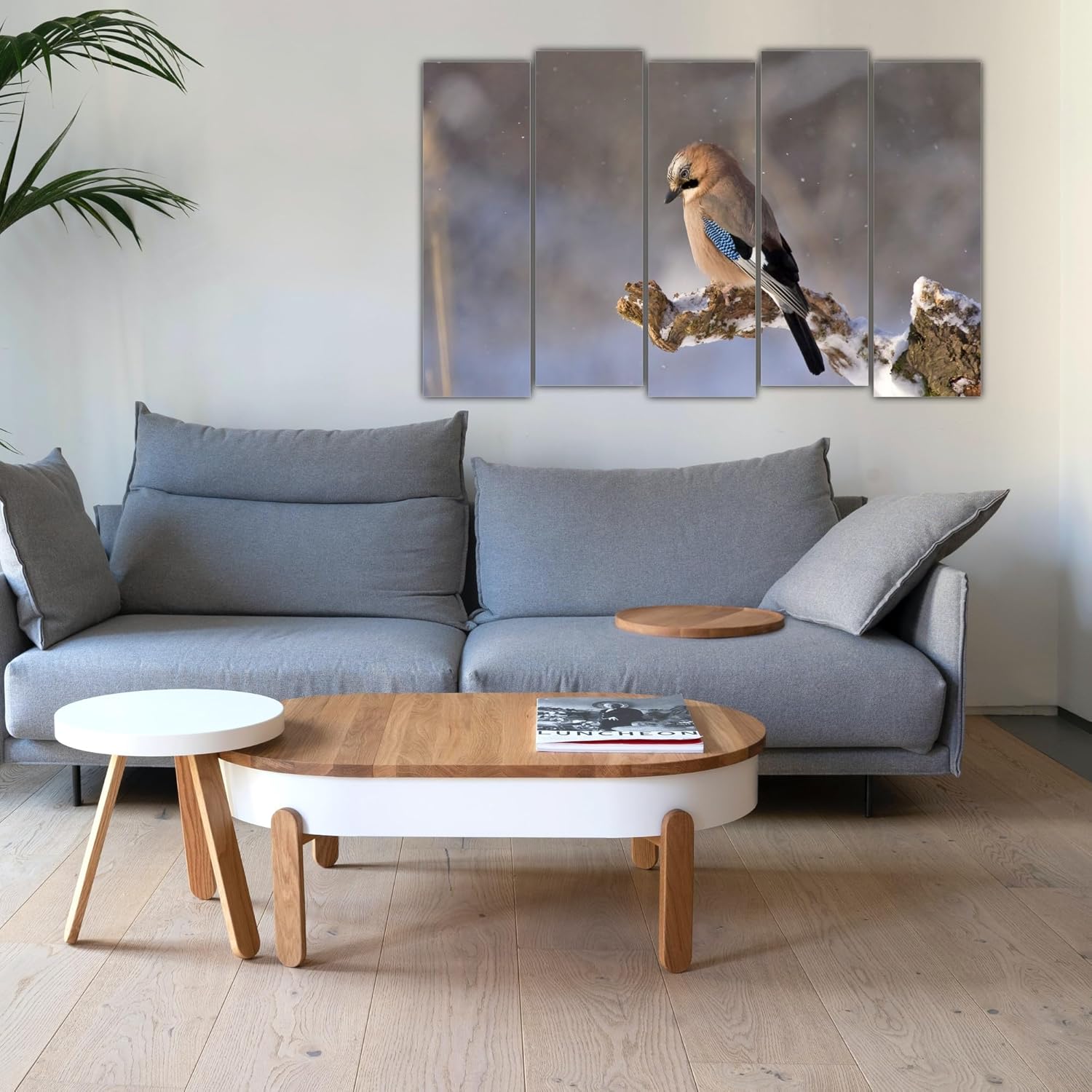
This 127cm Moolwan Winter Bird Canvas Wall Art Painting occupies exactly 35% of a 12-foot wall—the proportion interior designers call "intentional presence." Not so large that it dominates conversation; not so modest that guests wonder if you're still decorating. The 5-panel split-frame design adds visual rhythm across 127 centimetres, with each panel carrying a fragment of this serene winter scene: a Eurasian Jay perched on a snow-dusted branch against a dreamy blue-gray bokeh.
Your walls are probably cream, off-white, or that builder's peach common in Indian apartments. The soft grays and muted blues in this artwork won't clash—they'll create a subtle temperature contrast that draws the eye without screaming for attention. The warm browns of the bird's plumage and the organic branch echo the wooden furniture most Indian homes already have.
Why 127cm Works on 12-Foot Walls (and What Happens If You Go Smaller or Bigger)
A 12-foot wall spans approximately 360cm. This canvas covers 127cm of that—leaving roughly 116cm of breathing space on each side. That's not empty wall; that's intentional negative space.
Here's the math: 127cm ÷ 360cm = 35% coverage. Interior proportioning guidelines suggest 30-40% coverage for a single focal piece. Go smaller—say, a 90cm canvas—and you drop to 25% coverage, which makes the artwork look like an afterthought. Go larger at 180cm, and you hit 50% coverage, which can overwhelm unless you have unusually minimal furniture beneath.
If your wall is 10 feet (300cm), this same 127cm canvas gives you 42% coverage—still within the comfortable range, just slightly more commanding. For 14-foot walls (420cm), you get 30% coverage, making this canvas appear more refined and gallery-like.
The Color Reality: How These Blues and Browns Look Against Indian Home Walls
The dominant colors here are soft gray-blue (the dreamy bokeh background), warm taupe-brown (the bird's body), and accents of bright blue (wing feathers) with white (snow). In product photos, these look crisp. In your home, they'll shift based on lighting.
Morning natural light from east-facing windows will emphasize the cool blue-gray tones, making the scene feel fresher. Evening LED lighting—especially warm-white bulbs common in Indian homes—will pull out the brown and beige undertones, making the bird appear warmer and the overall artwork feel cosier.
Against cream walls, the contrast is gentle. Against off-white, slightly more defined. If you have builder's peach walls, the blue tones will pop more noticeably—not unpleasantly, but more prominently than you might expect from the product image.
Installation Takes 15 Minutes (Even If You're Not Handy)
Five panels. Five mounting points. At 3000 grams total (about 600 grams per panel), each frame is lighter than a standard hardcover book. The frames arrive with pre-attached hanging hardware—no drilling, no complicated D-rings to figure out.
For rental apartments, you have options. Command strips rated for 1kg per strip can handle individual panels easily—use two strips per panel for security. This means zero holes, zero deposit drama. For permanent homes, simple picture hooks work perfectly; the holes they leave are easily filled with M-Seal or white cement if you ever redecorate.
Spacing between panels matters. The standard gap is 2-3cm—close enough that the panoramic image reads as unified, far enough that each frame has its own shadow line. A measuring tape and a pencil to mark positions takes the guesswork out of alignment.
How This Compares to Single-Panel Canvas and Marketplace Alternatives
Single-panel canvas at 127cm would give you the same width coverage, but loses the dimensional layering that multi-panel art provides. When light hits five separate frames at slightly different angles, you get subtle shadow play that flat canvas simply cannot replicate.
Marketplace canvas at ₹800-1,200 typically uses 180 GSM canvas (versus Moolwan's 340 GSM cotton canvas), thinner 0.5-inch frames (versus 1.5-inch kiln-dried pinewood), and water-based inks that fade faster in Indian humidity. You might save ₹1,500 upfront, but replacement within 2-3 years becomes likely, especially if your home doesn't have AC running constantly.
The heat-treated, splash-resistant coating on this Moolwan canvas handles monsoon humidity (70-85% in most Indian cities) without warping or color bleed—something budget alternatives rarely guarantee.
What This Will Actually Look Like in Your Living Room
Viewing distance matters. From your sofa—typically 8-10 feet from the wall—the five panels merge into a single coherent image. Walk closer to 4-5 feet, and you'll notice the individual frames and the texture of the canvas weave. Both views work; they're just different experiences.
The 76cm height means the artwork's vertical center should sit at approximately 150cm from the floor (standard eye level). Above a typical Indian sofa (45-50cm seat height with cushions), this positions the bottom edge of the canvas roughly 30-40cm above the sofa back—enough clearance that nobody's head obstructs the view.
The winter theme might seem counterintuitive for Indian homes, but the muted palette and natural subject matter work year-round. This isn't a Christmas piece; it's a nature study that brings calm, particularly in homes with otherwise warm or earthy décor.
Quick Specifications
- Product: Moolwan 5-Panel Winter Bird Canvas Wall Art Painting
- Total Dimensions: 127cm (W) × 76cm (H) × 0.6cm (D)
- Weight: 3000 grams (3kg total, ~600g per panel)
- Canvas: 340 GSM cotton with moisture-resistant coating
- Frame: 1.5-inch kiln-dried pinewood (12% moisture content)
- Finish: Heat-treated, splash-resistant surface
- Inks: Eco-solvent, UV-resistant
- Subject: Eurasian Jay bird on snowy branch, winter nature scene
- Colors: Soft blue-gray, warm brown, white, accent blue
- Ideal Wall Size: 10-14 foot walls (35% coverage on 12ft)
- Installation: Pre-attached hardware, rental-friendly options available
- Delivery: 5-6 days (metro), 6-8 days (tier-2/3 cities)